Over the past several years we have taken a look at several Hebrew idioms to better understand the scriptures. In 2014 we discovered that the “heavens” refers to governments and rulers, and “earth” refers to the nations or peoples, most specifically to Israel’s leaders and people. We also discovered that the “sea” and “land” again symbolized nations and their peoples, and the “stars” are the angels.
In 2015 we discovered that to “fulfill the law” is a Hebrew idiom meaning: to properly interpret, to show how to apply the law, to do it rightly, and that to “abolish the law” is just the opposite, meaning: to misinterpret, to misapply the law, to do it wrongly, thus bringing down judgment. Another Hebrew idiom we looked at was the “trees”, which we found represents all human beings, and in 2018 we saw that the “Green Tree” is a title for the Mashiach, Yeshua.
Given the imminent return of Yeshua, today we look once again at another Hebrew idiom.
No One Knows The Day or Hour
Matthew 24:36, Mark 13:32 – “When that day and hour will come, no one knows – not the angels in heaven, not the Son, just the Father.”
This saying of Yeshua has been debated for ages, and many different explanations have been given. Is it a Hebrew idiom?, and if so, Where did it come from and just what does it mean? Let’s take a look at this saying and see what is known about it:
The Most Common Usage – A Hebrew Idiom
The common answer given by the bridegroom during ages past to someone asking the question: “When’s the wedding date?” was a well know Hebrew idiom: “I don’t know, the angels don’t know, ask my dad!” Today, if depression over the length of time taking to build the new home and furnish it to his father’s expectations had set in, the bridegroom might very well reply with one of today’s favorite expressions: “When the time is right!” By using this expression, “You do not know the day or the hour”, Yeshua may have simply been using a common wedding idiom to answer his disciple’s questions about the sign of his coming and of the end of the age. In short, he merely answered at the Pashat level of understanding: “It will be revealed when it is the appropriate time to do so.” This is in accordance with a similar question asked by Daniel. The answer was “keep these words secret, and seal up the book until the time of the end” (Daniel 12:1-4).
The Tense of the Word Eido
The word translated knows in Matthew 24:36 and Mark 13:32 is the Greek word eido [οἶδεν G1492], and is in the perfect tense. The perfect tense describes something that was true or completed in the past, was still presently true at the time it is spoken, but which would not necessarily be true in the future. Therefore, it can’t be taken dogmatically that no one will ever know, which would be in violation of numerous scriptures that clearly state that the Bride of Yeshua will know and will not be taken by surprise (Amos 3:7, 1 Thessalonians 5:1-5, Hebrews 10:25, Revelation 3:3, etc.).
There are stark and complete reversals throughout scripture: prophecy sealed (Daniel 12:4) and then prophecy unsealed (Revelation 22:10). No one can know (Matthew 24:36, Mark 13:32) and now you do know (1 Thessalonians 5:1-5, Revelation 3:3).
Furthermore, the word eido can be translated as: to make known. Paul uses it this way in 1 Corinthians 2:2, saying in essence: “I have determined not to make known to you, or to openly declare, anything expect the crucified Yeshua Ha’Mashiach.” If this is the manner in which Yeshua used the word eido in Matthew 24:36 and Mark 13:32 then the verse would read more properly: “Neither I nor the angels will make known or declare that day, only my father in Heaven will reveal or declare it.” The 1930 Concordant Version of the Sacred Scriptures does just that, translating Matthew 24:36: “That day and hour not yet anyone has perceived, not yet the messengers [angels] of the heavens, not yet the Son, [but] the Father only.”
This takes all emphasis off of no one can know the timing and places it distinctly into the realm of mystery – a fact currently concealed and not yet revealed because it isn’t the time to do so – or it is simply one of those concealed matters that brings glory to Yahweh, and which the kings are to investigate to their glory! This takes all emphasis off of no one can know the timing and fully agrees with the rest of scripture which says we will know the day and hour!
Yeshua Knows The Future
There are many scriptures which clearly show that Yeshua knew the future. He states unequivocally in Matthew 24:25: “Behold, I have told you in advance”, repeated in Mark 13:23, just a few verses before the contested “no one knows” verses! Avi Ben Mordechai writes: “If He knew the future in Mattityahu 24:25, and the context concerns the Day of Trouble, why would He suddenly speak as though He did not know the future in the same context just 11 verses later in Mattityahu 24:36? Was He confused? Or was He making perfect sense in light of the customs of the Jews?” Needless to say, Yeshua was neither confused nor unaware of future events and their exact dates of fulfillment!
Avi Ben Mordechai devotes a chapter in “Signs In the Heavens” to explaining what the idiom “no man knows the day or hour” truly means from a rabbinical Hebraic perspective. He states: “It is a figure of speech. Yeshua used this figure of speech to say: “I am coming for my Bride on such and such a day! Be watching!” The phrase, “of that day and hour no man knows” refers to the sanctification or setting apart of the new moon. Without this sanctification, the Jews had no way of determining Yahweh’s appointed times or moedim.”
1. We do not know the day or the hour: A Reference to Yom Teruah?
Yom Teruah, or The Feast of Trumpets, is also called Rosh Hashanah. It is the festival of the Jewish New Year, and the only moed that celebrates a New Moon. It starts on the first day of the first month. Its three main themes are Resurrection of the Righteous, Kingship of the Lord, and Marriage of the Lamb. Only when two witnesses see the edge of the moon, can the festival start. This requirement introduces slight variable time to it’s inception. The Jews celebrate what is supposed to be the first day of the seventh month, Tishri, (Leviticus 23:23-25) over a two-day period because it is “the day of which no one knows the day or hour.” For this very reason, Yom Teruah was, and still is, referred to as “the moed that no one knows the day or hour of!” They had a two day period in which they knew it would happen, but not the exact time. Hence, “You do not know the day or the hour.”
• Yom Teruah: Day of the Awakening Blast, or Day of the Sounding of the Shofar.
Leviticus 23:24 – “Speak to the sons of Israel, saying, ‘In the seventh month on the first of the month you will have a rest, a reminder by blowing of trumpets, a holy convocation.”
Numbers 29:1 – “On the first day of the seventh month you will have a holy convocation; you will not work at your occupations. It is a day for you to blow the trumpets.”
Yom Teruah, The Feast of Trumpets, is indelibly linked with the blowing of trumpets. The celebration uses 100 distinct blasts but only four different types of blasts during the festival. They are the single Tekiah blast which signifies the sound of the King’s coronation, the three short Shevarim blasts which signify repentance, the nine staccato Teruah blasts of alarm which signify the call to awaken the soul, and the great long Tekiah Ha’Gadol blast which signifies the voice of Yahweh. The fourth and final type, the Tekiah Ha’Gadol, is known to the Jews as the “Last Trump” or as the “Trump of God”. Paul references this in his epistles!
• Yom Ha’Natzal: Day Of The Resurrection Of The Righteous Dead And Taking Up Of The Living Righteous
Daniel 12:2 – “Many of those who have died will awaken to everlasting life, but others to disgrace and everlasting contempt.”
Isaiah 26:19 – “Your dead will live, their corpses will rise. You who lie in the dust, awake and shout for joy!”
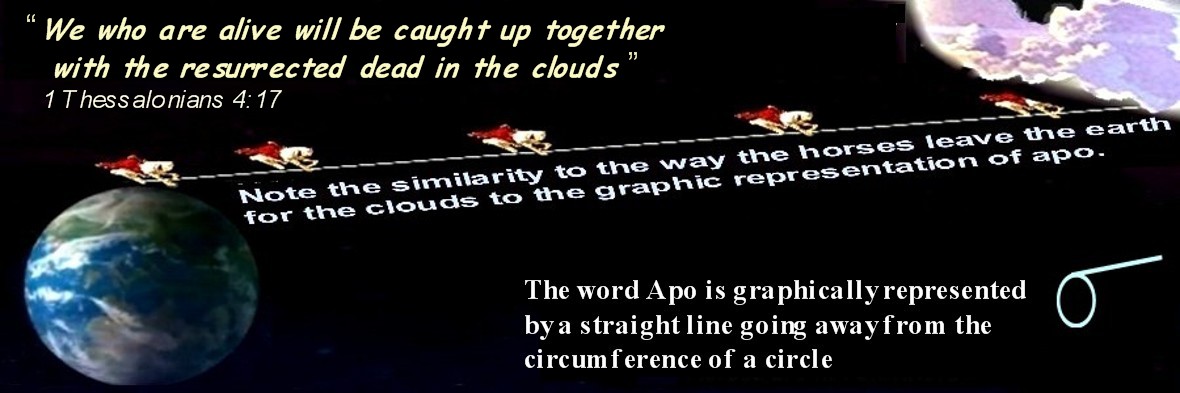
In 1 Thessalonians 4:16-17, the apostle Paul writes that “Yeshua himself will descend from Heaven with a loud shout, with the voice of the archangel, and with the trumpet call of Yahweh . . .” Paul states that when the trumpet of Yahweh sounds, “those who have died believing in Yeshua will rise first. After that, we who are still alive will be gathered up with the resurrected dead in the clouds to meet Yeshua in the air. And we will be with him forever.”
In 1 Corinthians15:51-52, Paul tells us: “Behold, I tell you a mystery; we will not all sleep, but we will all be changed, in a moment, in the twinkling of an eye, at the last trump; for the trumpet will sound, and the dead will be raised imperishable, and we will be changed.” The last trump is referring to the Moed of Yom Teruah and reveals the day of the resurrection of the righteous dead and their catching away or rapture.
According to 1 Thessalonians 4, when this trump is sounded, the dead rise and then both they and the Bride of Yeshua go to meet Yeshua in the clouds. This day of resurrection is a day of blessing, or as Paul puts it in Titus 2:13 – “our blessed hope”. Peter says the same in 1 Peter 1:13.
• Yom Ha’Keseh: The Hidden Day, The Day of Hiding, The Day of Concealment.
Psalm 84:3 – “Blow the trumpet at the new moon, at the concealed time, on our feast day.”
Another name for Yom Teruah is Yom Ha’Keseh – the day of hiding. Yom Ha’Keseh can be interpreted several different ways. Firstly, it references the day when the moon is just coming out of hiding, in other words, a day of a concealed moon. Secondly, Satan is not be given notice about the arrival of Yom Teruah, the Day of Judgment. A hidden day because it was hidden from Satan, the adversary, in the same manner that the resurrection of Yeshua on the third day was hidden from his knowledge. By using this expression, “You do not know the day or the hour”, Yeshua may have been referencing both Yom Teruah and the Yom Ha’Keseh at the Sod level of understanding. When there is a full moon, it is not concealed or hidden. But when there is a new moon, it is hidden or concealed.
This same process (two witnesses viewing the first sliver of the moon and reporting it to the Sanhedrin) was used to determine the beginning day of every month, in Hebrew: Rosh Chodesh. Today, the Rabbis boot up their computers and follow the dates and times listed by the software and simply announce the first day of the month one week before the indicated computed date!
• The Yom Teruah Time Zones
When the official beginning of the Yom Teruah Moed is proclaimed in Jerusalem by the Sanhedrin, in other time zones the moed begins at a different time! In some areas it may be daylight, and on the opposite side of the globe, nighttime. In Jerusalem, it may be on the first day, but in the United States it is still the seventh day. Even in the United States, it may begin at 4:00 pm in the Eastern states but at 1:00 pm in the Western states. Hence, “You do not know the day or the hour.”
2. We do not know the day or the hour: A Reference to The Wedding?
Only the father of the groom can determine when the new home that his son is building for himself and his bride is finished. Only the father of the groom can determine when it is time for the groom to go get his bride. Hence, “You do not know the day or the hour.” Again, Avi Ben Mordechai states: “It is a figure of speech. Yeshua used this figure of speech to say: “I am coming for my Bride on such and such a day! Be watching!”
3. There Ain’t No Signs, They Say – Oh give me a break.]
No doubt you have heard it said, “Yeshua can come at any time, – it can happen at any moment, without notice” or the corollaries – “Yeshua can come at any time, even while you are reading this article, even while we are speaking, etc.”
No doubt you have also heard it said that “there are no signs that precede the resurrection / rapture – the resurrection / rapture is a sign-less event.” But I say scripture presents an entirely different scenario and those who say there are no signs are greatly mistaken – there are many signs that point to the resurrection and the rapture.
The Signs
Matthew 24:33 – “When you see all these things, you are to know that the time is near, right at the door.”
Mark 13:8 – “Nations will fight each other, there will be earthquakes in various places, there will be famines; this is but the beginning of the ‘birth pains’.”
Luke 21:28 – “But when these things begin to happen, stand up and raise your heads, because your redemption is drawing near.”
Romans 8:23 – “We groan inwardly as we eagerly await our adoption, the redemption of our bodies.”
When asked about the signs pointing to his return, Yeshua spoke of many things to watch for: the destruction of the temple, Israel back in the land, many coming in his name, famines, pestilences, wars and rumors of wars, signs in the heavens, and great earthquakes in various places, just to name a few signs. But these warnings came with a caveat: “but the end will not follow immediately,” and “don’t be deceived.” Luke 21:28 also tells us that all these signs point to our redemption, or as Paul puts it in Romans 8:23 – “the redemption of our bodies” from death and corruption!
4. But we can know the season.
Yeshua cautioned his followers not to speculate on the exact time of The Rapture, but in the light of eternity past and future, “day and hour” is a very narrow slice of time. Yeshua gave us at least fifteen specific signs that would be happening in the last days, clearly wanting us to know when the time of his return was rapidly approaching. Many of the fifteen signs are being fulfilled today which strongly indicates we are living in the last days. We are, after all, living through revolutions, wars and rumors of wars, and horrifying persecution, for starters. Without doubt, that “day and hour” is imminent!
In 2017 Israeli connections between scripture and generations were noted:
– It has been 120 years from the first Zionist Congress held Basel.
– It has been 100 years from the Balfour Declaration.
– It has been 70 years from the United Nations Resolution 181.
– It has been 50 years from the Capture of Yerushalayim.
– It has been 3 years from the Blood Moon Tetrad.
But even more importantly:
– The Jews are back in the land of Israel.
– The Judean desert is blooming.
– Hebrew is once again a national language.
– The Israeli Defense Forces are an exceedingly great army.
– Yerushalayim has been conquered and is in the control of the Israelis.
– Yerushalayim is rapidly becoming the focal point of world politics.
– The tenth Red Heifer candidates, or Parah Aduma, have not yet been disqualified.
Matthew 24:33 – “When you see all these things happening, you will know that the time of Yeshua’s appearing is near, right at the door.”
The word know, ginosko [γινώσκω G1097], is the prolonged form of a primary verb; to “know”. It means to know absolutely, to be aware of, to perceive, to be resolved, be sure, to understand. The word translated near, eggus [ἐγγύς G1451], means literally or figuratively, a place or time which is at hand, near, nigh unto, ready. Hence, the season will be known.
When we see the beginnings of pains (often translated sorrows), we know that the time is near – Matthew 24:1-14. As the pregnant woman approaches the time to give birth, She writhes and cries out in her labor pains . . . Isaiah 26:17-18. The Greek word for pains is odin [ὠδίν G5604] meaning a pang or throe especially of childbirth, a pain, sorrow, travail. Hebrew words for birth pains are chuwl [חוּל H2342], chiyl [חִיל H2427], and chebel [חֶבֶל H2256]. Again, when we see the whole creation, especially the Earth, groaning with birth pains, wars and rumors of wars, famines, pestilences, earthquakes, etc., we know that the time (or season) is near.
5. The Imminent Return
The Day and Hour – An Idiom
Let’s examine the scriptures and see what they say about Yeshua’s Imminent Return and if it is an event that occurs at a set Day and Hour.
When the disciples asked Yeshua “What will be the sign that you are coming, and the end of the age?, he replied “Neither I nor the angels will make known or declare that day, only my father in Heaven will reveal or declare it . . . therefore stay alert, because you do not know the day or the hour” (Matthew 24:36, 24:42, 25:13; Mark 13:33; Luke 12:40).
Day and Hour was a well known phrase, or idiom in that time. Several possibilities would have immediately come to mind:
1. Is Yeshua talking about a specific Day and Hour, such as a specific Rosh Chodesh – a specific new moon? And the answer is yes!
2. Is Yeshua talking about a specific Yom Teruah, known as the Day and Hour that no one knows? And the answer is yes!
3. Is Yeshua talking about a wedding ceremony, in which the Father determines the time when the bridegroom is given permission to go get his bride? Maybe, but not as a definition of imminent . . .
In essence, what Yeshua said to his disciples was: “Y’all will not know which day I will return, but here’s a hint – I will return on a Rosh Chodesh!” Yeshua alludes to a coming at Rosh Chodesh, a new moon whose date he will not reveal, as only the Father has the authority to do so, and Paul tells us which new moon is being referenced – the new moon known as the Last Trump, again without revealing exactly which Yom Teruah it will be! (1 Corinthians 15:52).
The scriptures are very clear, precise, and definitive that this will only take place on some yet future Yom Teruah, which happens on Rosh Chodesh – the new moon. This alone succinctly negates the paradigm that “Yeshua can come at any time”, as well as the paradigm that “Imminent means at any time“, but the Bible has a lot more to say about this.
Set Times and Seasons – An Idiom
Let’s examine the scriptures and see what they say about the Imminent Return – can it indeed happen at any time, or is it is an event that occurs at a Set Time and Season.
Leviticus 23:2 – “These are the appointed times of Yahweh that you shall proclaim as holy convocations; they are my divine appointments.”
Acts 1:7 – “Yeshua said ‘You don’t need to know the times or seasons that the Father has fixed by his own authority’.”
1 Thessalonians 5:1 – “You have no need to have anything written to you, brothers, about the times and seasons when this will happen.”
The word seasons, used by both Yeshua and Paul, is the Greek word kairos [G2540 καιρός] which means a set time or occasion. In Hebrew, that word would be zman [H2166] which also means an appointed occasion. Some translations use the word “dates” in place of the word times, which gives a more accurate sense of the terms being used.
Set times and seasons in scripture, like day and hour, is an idiom! And scripture succinctly tells us that the set, appointed times are the Moedim [H4150]!!! he Imminent Return has everything to do with the Moedim, the set Times and Seasons, and nothing to do with events that happen at any time or instantly.
The set Times and Seasons, the Moedim, are dress rehearsals for the real event – prophecies in the making, just waiting for the curtain to rise and the play to begin. When the time is fully come for the rehearsal to become the play, then the curtain rises on the show and the events that the moedim prophecy take place.
• Pesach always takes place on the 14th of Nissan.
• Chag Ha’Matzoh always takes place the next day, and
• Reishit Katzir always takes place on the following Sabbath.
• Shavuot follows exactly 50 days after Chag Ha’Matzoh.
• Yom Teruah always takes place on the 1st Day of 7th Month, at Rosh Chodesh
• Yom Kippurim always takes place on the 10th Day of 7th Month, and
• Sukkot always starts on the 15th Day of 7th Month.
The seven Moedim have embedded prophecies of coming events. The pattern to the prophecies represented by the Moedim is: the death, burial, and resurrection of Yeshua, the giving of the spirit, the resurrection of the dead in Yeshua and the rapture, the judgment, and the millennial reign. The first four prophecies embedded in the Moedim have already been completed, or as some say, fulfilled.
The next Moed, Yom Teruah, prophesies the day of the resurrection of the righteous dead, the taking up of the living righteous, and the day of hiding and concealment – before the time of tribulation.
Some may imply that Yom Teruah is random, since it can only be declared when two witnesses see the edge of the moon, hence, the expression Yeshua used: “You do not know the day or the hour” (Matthew 24:36). But this two day period does not indicate a random any ol’ time event – not in the least.
Redemption – An Idiom
Let’s examine the scriptures further and see what they say about the Imminent Return and Redemption.
Matthew 24:32-33 – “Learn a lesson from the fig tree: When its branches become green and soft and new leaves appear, you know summer is near. In the same way, when you see all these things happening, you will know that the time is near, ready to come.”
Luke 21:28 – “When these things begin to take place, stand up and lift up your heads, because your redemption is near!”
When asked about the signs pointing to his return, Yeshua spoke of many things to watch for: the destruction of the temple, Israel back in the land, many coming in his name, famines, pestilences, wars and rumors of wars, signs in the heavens, and great earthquakes in various places. But these warnings came with a caveat: “but the end will not follow immediately,” and “don’t be deceived.”
Yeshua spoke of the time of redemption, which would happen when all those signs began to appear (Luke 21:28).
Romans 8:23 – “We groan inwardly as we eagerly await our adoption, the redemption of our bodies.”
Paul specifically states that this time of redemption is the redemption of our bodies.
Hello!
That is the resurrection and change from mortal to immortal which happens at the last trump – in other words at Yom Teruah. Expecting Yeshua to come at any time, was not anticipated by the people of that day. What they did expect was that he would return in their lifetime to fulfill the next moed, Yom Teruah.
This, of course, did not happen, as too many signs had to be evident, and at that time they were not. But today, those many signs are not only evident, but are converging. Neither then, nor now “Yeshua can come at any time” is not at all accurate.
Day of the Lord – An Idiom
Finally, let’s examine the scriptures and see what they say about the Imminent Return and the Day of the Lord – yet another idiom – Day of the Lord – in other words, the Tribulation Period.
1 Thessalonians 4:13 – “Now, brothers, we want you to know the truth about those who have died.”
1 Thessalonians 4:16 – “For the Lord himself will come down from heaven with a rousing cry, with a call from one of the ruling angels, and with God’s shofar; those who died united with the Messiah will be the first to rise; then together we who are still alive will be caught up with them.”
A question arose about those who had died, as well as those who were still living. People were asking Paul if they had already missed the Resurrection and the Rapture: and were now in the Day of the Lord, the Tribulation Period.
The Apostle Paul assured them that the Tribulation Period had not yet begun; the dead must rise first before the living are raptured and the Tribulation Period begins. For more on this, see the article: “You Have Heard it Said”
1 Thessalonians 5:1 – “You have no need to have anything written to you . . .when this will happen.”
The Apostle Paul continued and reminded them that he had already taught them about the prophecies embedded in the Moedim. He taught that the first four had been completed, and assured them that the coming moed of Yom Teruah represents the day of the resurrection of the righteous dead, the taking up of the living righteous, and the day of hiding and concealment before the time of tribulation. He taught that the next moed to be fulfilled, Yom Teruah, was still a future, imminent event.
Did you catch that? A future, imminent event!
An event that they were to watch for and anticipate experiencing!
2 Thessalonians 2:1-3 – “We ask you not to be easily shaken in your thinking or anxious because of a spirit or a spoken message or a letter supposedly from us claiming that the Day of the Lord has already come. Don’t let anyone deceive you in any way. For the Day will not come unless the departure comes first.”
Somebody must have been in a real hurry to see the final three moedim fulfilled, as the Thessalonians had received a letter from someone claiming that the Day of the Lord had already come – in other words, Yom Teruah had already happened, you guys missed the boat, and now you are in the time of Yom Kippur, the Tribulation Period.
Paul was having nothing to do with that nonsense, saying: “Don’t let anyone deceive you in any way. For the Day will not come until after the departure” – in other words, not until the apostasia (apostasy) was in process and Yom Teruah had been fulfilled. The day of the resurrection of the dead had not yet happened, nor had the rapture.
Their imminent expectations were not fulfilled and they were still waiting! “Yeshua could come at any time” was not at all accurate, according to Paul.
Conclusions
The case for “You do not know the day or the hour” being an actual Jewish idiom is very sound. It may be referencing a common wedding expression at the Pashat level of understanding, or both Yom Teruah and the Yom Ha’Keseh at the Sod level of understanding. Yeshua, in proclaiming that “No one knows the day or hour” was not stating that The Rapture event would be impossible to see coming. Just the opposite – he clearly states that the season during which this will happen should be plainly obvious to everyone.
This statement in no way contradicts other scriptures as to whether or not one will know the day and hour today, as opposed to not knowing it when Yeshua spoke it. A more proper translation of the Greek places it into the realm of mystery – a fact currently concealed and not yet revealed because it isn’t the time to do so.
If we look at the Yom Teruah model, everyone knows within two days when this celebration will begin. If we look at the Wedding model, everyone in town would know when completion was getting close, but not which specific day the father would tell his son to go get his bride. Hence, you do not know the day or the hour, but you should not be caught unawares of the season.
Yeshua himself proclaims that he can only come at the set Time and Season that the Father “has set by his own authority” – in other words, at Yom Teruah. “Yeshua can come at any time” is not accurate.
Yeshua’s return will only happen at a Set Time and Season – at the time of the Yom Teruah Moed. “Imminent means coming at any time” is also not accurate.
Yeshua himself proclaims that we are to look up when we see our “redemption is near” – in other words, when we see signs that we are in the season of the final Yom Teruah.
Paul tells the people of his day that the Day of the Lord had not yet come, that the letter they had received was in error and not a letter he sent.
The Day of the Lord speaks about the Tribulation Period, which cannot happen until the Dead in Yeshua have been raised, the Rapture has occurred, and the apostasia is in full swing.
The Imminent Return we should be looking for is the fulfillment of the Yom Teruah Moed.
Final Thought
Luke 21:28 – “When these things begin to take place, stand up and lift up your heads, because your redemption is near!”
We are always to be ready for Yeshua to return. Are you ready? If not, then get ready. Exercise whatever time you have to repent and trust Yeshua for your eternal salvation. Do not test Yahweh’s patience and wait too long – the dress rehearsals will not continue much longer. May Yom Teruah this year be fulfilled in the resurrection of the dead and the rapture of Yeshua’s Bride.
 Rapture Parallels, Patterns, Pictures, and Types